

Summary

Want to grow your work without cold emails or forced events?

Learning how to network in a coworking space can open doors to clients, partners, and new ideas.

These shared offices mix freelancers, startups, and remote workers in one place.

Simple chats by the coffee machine or at events often lead to real business.

This guide covers why it works, easy steps to start, common mistakes to skip, and answers to frequent questions.

You will see how steady, helpful connections beat hard selling every time.
Introduction
How do you network in a coworking space without feeling pushy or awkward?
Many people join these shared offices for a desk and Wi-Fi.
Yet the real value often comes from the people around you.
When you network in a coworking space the right way, you meet possible clients, find partners, and learn new skills.
You do it through everyday talks, not forced pitches.
Coworking spaces bring together freelancers, small business owners, and remote workers.
Studies show that 82 percent of members expand their professional networks after joining.
Freelancers who network in a coworking space report landing 64 percent more projects from the connections they make.
Networking drives a large share of new client wins in this setting.
About 59 percent of professionals in these spaces call networking key to growing their work.
This post walks you through clear reasons to try it, practical steps that feel natural, mistakes to avoid, and answers to common questions.
The goal is simple: build real relationships that help your work over time.
Why Network in a Coworking Space?
You share the same kitchen, meeting rooms, and quiet zones with people from many fields.
That mix creates easy chances to connect.
Here are some clear benefits:
a. Finding potential clients – Someone nearby may need the exact service you offer.
b. Getting referrals – Happy connections often recommend you to others.
c. Discovering business partnerships – Two people with matching skills can team up on projects.
d. Learning from other professionals – You pick up tips on tools, pricing, or marketing just by talking.
e. Finding freelancers or collaborators – Need a designer or writer for a short job? Ask around.
f. Getting career opportunities – Remote workers and company teams sometimes share job leads.
g. Building your professional reputation – Consistent helpful behavior makes people remember you.
h. Finding potential mentors – Experienced members often share advice freely.
i. Staying motivated and connected – Working alone can feel isolating. Shared spaces fight that.
Research notes that 75 percent of deals in these environments start from a personal introduction or referral.
Community and networking rank among the top reasons people choose coworking.
When you network in a coworking space, you turn daily presence into steady opportunities.
Practical Ways to Network in a Coworking Space
You do not need to become the loudest person in the room.
Small, consistent actions work better.
a. Start With Simple Conversations
Say hello at the coffee machine or while waiting for a meeting room.
Comment on the space or ask what someone is working on.
Keep it light.
Many strong links begin with a short chat about the weather or a shared frustration with slow internet.

b. Attend Coworking Space Events
Most spaces host happy hours, workshops, or member mixers. Show up.
Listen more than you talk at first.
These events make introductions easier because everyone expects to meet new people.
Aim to go to a few each month so faces become familiar.
c. Don’t Immediately Try to Sell Something
People notice when the first words out of your mouth are a pitch.
Focus on learning about the other person.
Ask what projects they enjoy.
Genuine interest builds trust faster than any sales line.
d. Introduce Yourself With a Clear Elevator Pitch
Prepare a short version of who you are and what you do.
Something like: “I help small shops improve their online stores.”
Keep it under 20 seconds. Practice until it feels natural.
When you network in a coworking space, a clear introduction helps people remember you.
e. Offer Help Before Asking for Help
Share a useful tip, introduce two people who should meet, or recommend a tool.
Giving first creates goodwill.
Later, when you need a referral or advice, people are more ready to respond.

f. Use the Coworking Community’s Online Channels
Many spaces have Slack groups, member directories, or private social pages.
Post a helpful resource or answer a question.
Online chats often lead to in-person talks. Stay active without flooding the channels.
g. Follow Up After Meeting Someone
Send a short message the next day.
Mention something specific from your talk.
Suggest a coffee or share an article related to their work.
Structured follow-up can raise conversion rates by nearly half, according to business research.
Without follow-up, most new contacts fade.
h. Build Relationships Beyond Your Own Industry
Talk to people outside your field.
A lawyer, marketer, and product designer in the same space can create surprising partnerships.
Cross-industry links often bring fresh ideas and unexpected clients.
When you network in a coworking space using these steps, the process feels less like work and more like normal conversation.
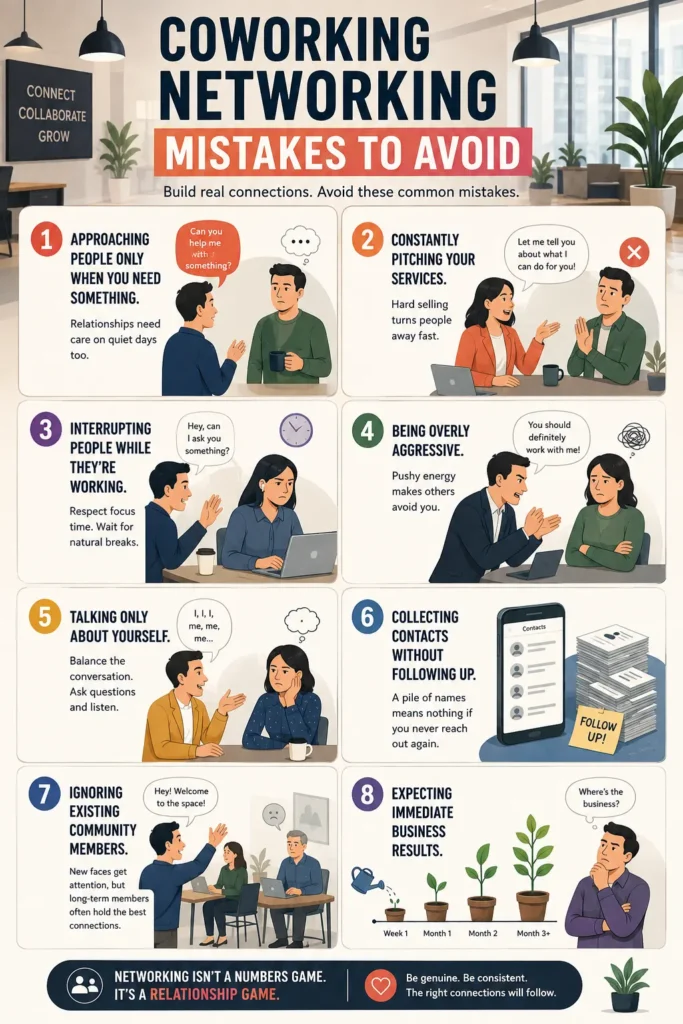
Coworking Networking Mistakes to Avoid
Even good intentions can go wrong. Watch for these common errors:
– Approaching people only when you need something. Relationships need care on quiet days too.
– Constantly pitching your services. Hard selling turns people away fast.
– Interrupting people while they’re working. Respect focus time. Wait for natural breaks.
– Being overly aggressive. Pushy energy makes others avoid you.
– Talking only about yourself. Balance the conversation. Ask questions and listen.
– Collecting contacts without following up. A pile of names means nothing if you never reach out again.
– Ignoring existing community members. New faces get attention, but long-term members often hold the best connections.
– Expecting immediate business results. Real links take weeks or months to turn into work.
Avoid these, and your efforts to network in a coworking space stay welcome instead of annoying.
Conclusion
Successful networking in shared offices rests on real relationships, steady presence, and giving value first.
You do not need to meet everyone in the building.
Start with one simple conversation this week.
Be curious about the person next to you.
Offer help when you can.
Stay connected through follow-ups and events.
Over time, those small steps add up.
Freelancers and small business owners who network in a coworking space often see more projects, better partnerships, and stronger motivation.
The space itself supplies the setting.
Your consistent, helpful approach turns that setting into results.
Be curious, be helpful, and stay connected.
That is the practical takeaway that works.
Also Read: What Are the Unwritten Rules of a Coworking Space?
Frequently Asked Questions
a. Is a coworking space good for networking?
Yes. The mix of freelancers, startups, and remote workers creates daily chances to meet new people. Many members report wider networks and more project leads after joining.
b. How do I approach someone in a coworking space?
Wait for a natural moment such as the kitchen or lounge. Smile, say hello, and ask an open question about their work or the space. Keep the first talk short and friendly.
c. What should I say when introducing myself?
Share your name, what you do in one clear sentence, and something light about why you like the space. Then ask about them. A short, clear introduction helps people remember you when you network in a coworking space.
d. How can I network without being awkward?
Focus on curiosity instead of selling. Listen more than you speak. Use events where everyone expects to meet people. Practice a short introduction until it feels easy.
e. Should I give my business card to everyone I meet?
No. Offer it only when the conversation shows real interest. Digital contact details often work better today. Quality beats quantity.
f. How do I find potential clients in a coworking space?
Listen for needs during casual talks. Share helpful advice first. Attend events and follow up with people whose work overlaps with yours. Over time, clients appear through trust, not hard pitches.
g. How often should I attend coworking events?
Once or twice a month is a solid start. Regular presence helps faces become familiar. You do not need to attend every single event.
h. Can coworking spaces help freelancers find clients?
Yes. Data shows freelancers who network in a coworking space often land noticeably more projects from those connections. The shared setting makes introductions feel natural.