
Summary
Working from home or locking into expensive traditional leases can severely limit growth and productivity.
Shared office spaces offer a cost-effective, flexible alternative for freelancers, startups, and remote teams.
By providing access to high-speed internet, modern conference rooms, and prime commercial addresses without heavy overhead expenses, these workspaces allow businesses to scale effortlessly.
Beyond financial savings, shared offices boost daily focus, establish healthier work-life boundaries, and foster natural networking opportunities within a collaborative community.
Ultimately, flexible workspaces empower modern professionals with the infrastructure, convenience, and human connection needed to thrive in today’s hybrid work landscape.
Introduction
Picture this: you are sitting at your kitchen table with a pile of cold coffee cups, trying to stay focused while the television blares in the next room.
Or maybe you are a business owner looking at commercial real estate leases, sweating over six-figure long-term contracts.
Work does not have to feel like a trap.
Shared Office Spaces offer a fresh, energetic alternative to the traditional daily grind.
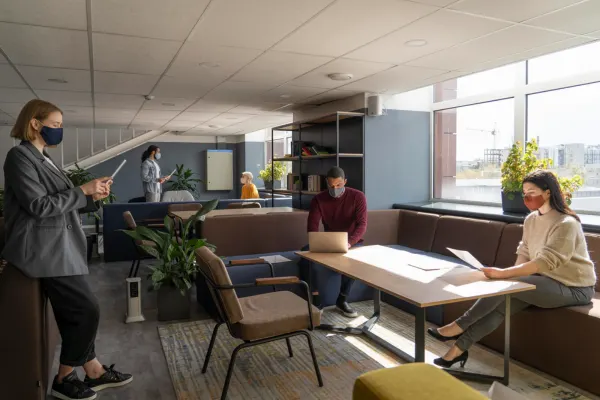
A shared office is a professional work environment where individuals, small teams, and growing companies share common space, equipment, and services.
This includes co-working hubs, serviced offices, and flexible hot-desking setups.
Why does this matter so much right now?
The shift toward hybrid work has left many people feeling lonely and fatigued at home.
At the same time, rising costs make traditional real estate risky for businesses.
Industry data shows that the global flexible workspace market is growing rapidly, valued at over $29 billion in 2026 with more than 5.5 million active users worldwide.
Shared office spaces deliver far more than just a desk and a seat.
Here are the top ten concrete benefits that make them ideal for freelancers, remote workers, startups, and expanding teams.
Benefits of Working in Shared Office Spaces
a. Cost-Effective Alternative to Traditional Offices
Renting a traditional office requires a huge up-front investment.
You have to pay security deposits, buy expensive furniture, set up Wi-Fi, and hire cleaning staff.
Shared office spaces eliminate these heavy overhead expenses.
You pay one simple monthly fee that covers utilities, high-speed internet, maintenance, and furniture.
- No huge upfront capital expenditures.
- Utility bills and janitorial services are included in your rent.
- Maintenance issues are handled by space managers, not by you.
For startups and small businesses, this financial cushion frees up money to hire staff and launch marketing campaigns.
b. Flexible Membership Plans
Business needs change fast.
A traditional office lease binds you for three to ten years, which can hurt your company if your team shrinks or expands suddenly.
Shared office spaces offer short-term flexibility that protects your business cash flow.
You can rent space by the day, month, or year depending on your budget.
If you bring on three new employees next month, you can upgrade your plan instantly without moving to a new address.
c. Better Networking Opportunities
Working alone in a home office can isolate you from potential partners and clients.
Shared office spaces place you in a lively community filled with diverse professionals.
On any given day, you might grab coffee next to a web designer, a tax accountant, or a social media expert.
- Organic conversations at the coffee bar often lead to new business partnerships.
- Companies can hire internal talent without paying recruiting agencies.
- Cross-industry collaboration happens naturally in shared lounge areas.
This natural networking environment creates constant growth opportunities for solo workers and startups alike.

d. Increased Productivity and Focus
While working from home offers convenience, it brings endless distractions like chores, pets, and family interruptions.
Shared office spaces provide a clear boundary between home life and professional life.
Seeing other people hard at work around you triggers psychological focus, helping you get more done in less time.
Most spaces feature acoustic phone booths, quiet zones, and ergonomic chairs designed to reduce fatigue and keep your output high.
e. Access to Professional Amenities and Infrastructure
Buying enterprise-grade office hardware is costly.
High-speed commercial Wi-Fi, multi-function printers, and video conference equipment require big budgets.
When you join shared office spaces, you get instant access to top-tier equipment.
Key amenities typically included are:
- Enterprise-grade fast Wi-Fi with backup security servers.
- Modern conference rooms equipped with smart screens and projectors.
- Soundproof phone booths for private client calls.
- Fully stocked kitchens with gourmet coffee, tea, and snacks.
These features make small teams look polished and professional without extra costs.
f. Professional Business Address
Using your home address on your website or business cards can pose privacy risks and look unprofessional to potential clients.
Shared office spaces offer virtual office packages and physical desk plans that provide a real commercial address in a recognized business district.
You gain mail handling services where staff receive and store your packages securely.
A physical business address builds trust with banking institutions, vendors, and high-value clients.

g. Work-Life Balance Support
Working where you sleep makes it hard to unplug at night.
Remote workers frequently experience burnout because work hours bleed into personal time.
Shared office spaces restore healthy boundaries.
Leaving your home to travel to a designated workspace creates a clear mental transition for your workday.
When you leave your desk at the end of the day, your brain registers that work is finished.
This separation improves sleep, reduces stress, and protects mental health.
h. Prime Business Locations
Location matters for client perception and talent recruitment.
Buying or leasing commercial real estate in downtown business hubs is out of reach for many growing organizations.
Shared office spaces are usually positioned in high-demand central areas near public transportation, cafes, and city landmarks.
This gives small businesses high-end visibility at a fraction of standard building costs.
It also makes commuting easier for team members and visiting clients.
i. Access to Events, Learning, and Resources
The best shared office spaces operate as learning hubs rather than basic real estate providers.
Community managers organize regular professional development events to support members.
- Lunch-and-learn workshops covering marketing, legal advice, and tax strategies.
- Networking mixers and community social hours.
- Guest speaker sessions featuring industry experts and successful founders.
These educational resources help you pick up practical skills without paying for outside courses.
j. Opportunities for Business Growth
Scaling a company in a traditional setup requires constant moving and expensive renovations.
Shared office spaces simplify team expansion.
If you start as a solo founder with one desk, you can easily add additional hot desks or transition into a private suite as you land new contracts.
According to enterprise studies, over 67 percent of technology startups in urban hubs use flexible workspaces to keep operations agile while scaling fast.

Conclusion
Shared office spaces have transformed from a basic trend into core business infrastructure.
They offer an unbeatable combination of financial savings, operational flexibility, professional perks, and valuable human connection.
By choosing shared office spaces, freelancers escape working in isolation, startups stretch their capital further, and remote teams gain a productive community environment.
If you want to revitalize your workday, consider booking a tour or testing a single day pass at a local facility.
Experiencing the community atmosphere firsthand is the easiest way to see if it fits your personal work style.
The future of work relies on flexibility and human connection.
Shared office spaces give you the exact tools, community, and support needed to thrive in today’s dynamic market.
Also Read: Can You Register Your Business at a Coworking Address?
Frequently Asked Questions
1. Are shared office spaces suitable for startups?
Yes, shared office spaces are ideal for startups. They significantly lower initial overhead costs and eliminate risky long-term lease commitments. Startups also gain access to networking opportunities, professional meeting rooms, and high-speed infrastructure from day one.
2. Can I rent a shared office for a single day?
Yes, most operators offer single-day passes and short-term desk passes. Day passes give you full access to open hot-desking areas, high-speed Wi-Fi, communal kitchen facilities, and quiet call areas without requiring a long-term membership.
3. Do coworking spaces provide meeting rooms?
Yes, coworking locations include fully equipped, professional meeting rooms. Members can book these rooms by the hour or day through a simple online app. Meeting spaces generally feature screen display technology, whiteboards, and video conferencing tools.
4. Is a shared office more affordable than a traditional office?
For most small-to-medium teams and solo workers, shared office spaces are far more affordable than traditional commercial leases. You avoid security deposits, utility setup costs, furniture purchases, janitorial fees, and building maintenance expenses.
5. Can I register my business using a shared office address?
Yes, many operators provide dedicated virtual office and dedicated desk plans that permit business address registration. This service allows you to register your company, secure mail handling, and present a commercial address on official documents.